[#14] It Wasn't the Hours: What Actually Breaks High-Performing Leaders
The thing that finally fixed my burnout wasn't more discipline. It was letting go of control.
RHYTHMS OF REST℠ wasn't born from success. It came from personal failure.
Over the next several issues of the newsletter, I'm going to lay out each piece of the RHYTHMS OF REST framework – one piece per issue. But before I do, I need to share how it came to be.
Ever since I can remember, I was a risk taker and leader, though admittedly, I didn't usually lead people in the right direction until my mid-twenties. One particular time at 15 years old, I had the great idea to convince my friends to rappel off a bridge in my town using a garden hose and rubber gloves. And it worked! At least the first time.
The second time we did it on a wet summer evening. I, of course, volunteered to go first. Without testing it, I grabbed on and started sliding down the hose at breakneck speed, and I hit the ground below with a thud. Luckily, it wasn’t that high, maybe 15-20 feet, and I had watched a lot of adventure shows, so I knew how to drop and roll when landing on the ground from a height. I waited a while just to give my friends a scare before I began to laugh. That was just one example of many.
That hard-driving personality carried through my childhood, teenage years, and into my twenties.
Growing up with an alcoholic father didn't help much, as part of my risk and ambition was certainly a cry for attention and affirmation. This carried through into my early leadership, and without knowing it, deprived of a father's attention, I sought to compensate for that deprivation through success and accomplishment. While it’s great fuel for accomplishment, it doesn’t work very well for life.
My first leadership roles began in a church where I became a volunteer youth, college, and music leader. That’s when the cracks began to appear — in my marriage, my lack of self-awareness, my body, and my spirit. They showed up as screaming matches with my wife, intimidation and rage, poor physical health, relentless overwork, and a spiritual life I used to compensate for what was lacking. The signs were to anyone looking, but like many churches that are simply seeking to fill holes with warm bodies, no one really took notice. During those early years, not one leader or mentor, of which I had several, pulled me aside and showed me a better way or offered help.
I was a ticking time bomb.
At 27, the cracks became a chasm, and I had a full-fledged nervous breakdown on my kitchen floor. I've shared about that many times before, so I won't go into detail here, but it took me a while to crawl out of that hole.
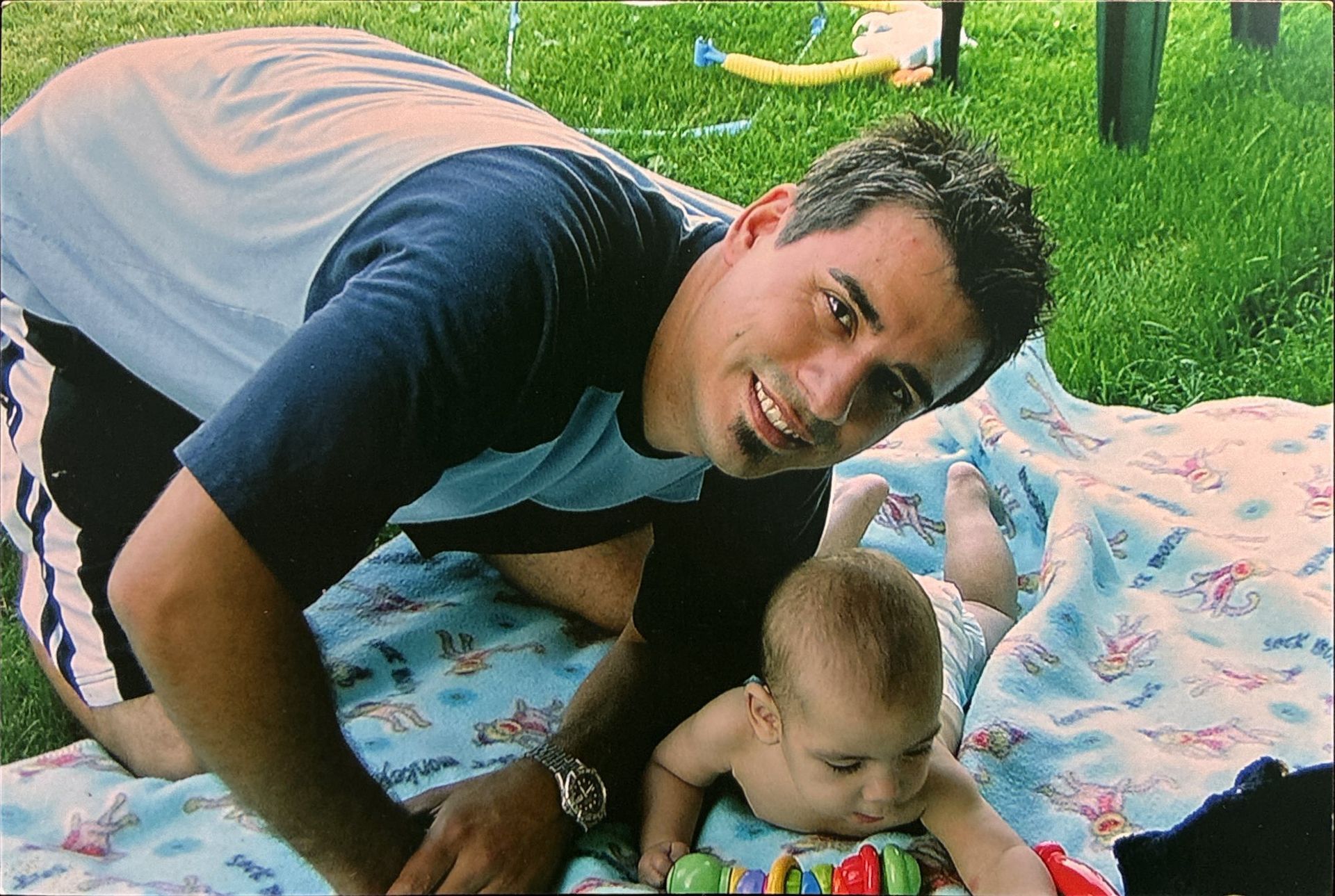
Over the next several years, 12 to be exact, things got incrementally better but were still mediocre at best, leading to a second near-burnout at thirty-nine, though not for a lack of trying. During those years, I tried everything only to end up back in the same place I started. By then, I was a father of three, leading an organization we had started four years earlier, and working part-time at an urban youth center to make ends meet, and on the verge of another breakdown. That’s when I had an epiphany:
You don't have to understand or control everything to live from a place of rest and peace.
Most people think their burnout is a workload problem. It's actually a control problem. That day I let go of the illusion of control. It changed everything. And the disparate practices of balance I had been piecing together for years began to crystallize into a whole-life framework that could withstand life's pressures and the weight of leadership.
Gone were the days of trying to balance everything. What surfaced instead were rhythms. You are not burned out from too much work. You are burned out from the wrong rhythm.
Everywhere I looked, I saw rhythm. The sun rose and set. The waves ebbed and flowed. The seasons came and went. The birds migrated and returned. Crops were planted and harvested. Living my life in rhythm led to exponential growth over the next 4-5 years. Our marriage went from a 5 to an 8 with counseling and work. I began exercising regularly and lost 15 pounds. I found a sustainable work pace with a weekly day of rest built in. Fun and hobbies found their way back into my life. And my emotional life was no longer that of a toddler, which led to new spiritual depth and maturity.
It was during those years that the RHYTHMS OF REST℠ framework began to take shape. I discovered an ancient way called a rule of life that supported the growth and development of the whole person rather than a fragmented one.
The roots of it go back thousands of years and have been tested by everyone from high-ranking government officials to monks. Simply put, a rule of life is a structure of support that leads toward thriving and wholeness.
Leadership is hard
Most leaders can name one or two areas of life that are going well and one or two that are not. What we often lack is a clear picture of the whole: the areas worth paying attention to, how each is doing, and how to integrate them all.
We often feel like Phil, a leader I coach, who once said, “When things are going well at home, work suffers, and when things are going well at work, home suffers.”
t doesn't have to be that way. You can build a thriving company, organization, or team without having to choose between work and home.
Life isn’t balanced and not every area requires equal time and energy. There are four rhythms that work together, and each one affects the other. They need different amounts of attention at different times and seasons but none can be neglected.
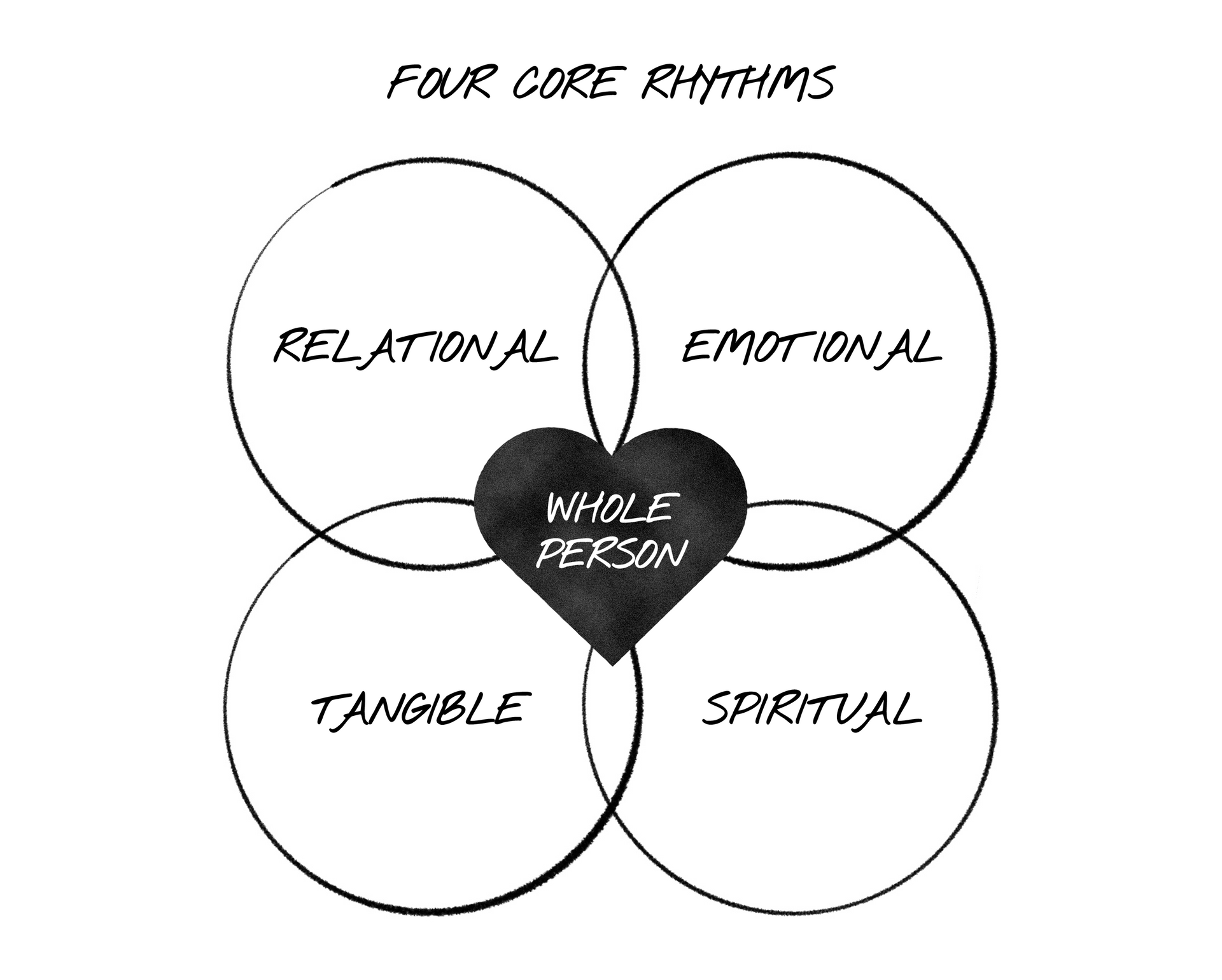
Much like a heart, where all four chambers must work together for proper blood flow, your life depends on four key rhythms working in harmony (not equality): Relational, Emotional, Spiritual, and Tangible. Here’s how I describe them:
Relational - Cultivating deep connections that energize rather than drain you, even when your schedule is packed
Emotional - Creating space to process, reflect, heal, and grow instead of pushing through everything.
Spiritual - Being grounded in your faith, transcendence, or a philosophy of life that provides meaning deeper than your next achievement or deadline
Tangible - Caring for your body, finances, and work in ways that support rather than sabotage your other rhythms
Here’s how the structure looks in picture form:
Your RHYTHMS check
Better scheduling won’t fix your rhythm problem and working too much is a symptom, not the root problem. We are using a Band-Aidto treat deeper problem — we have no framework for seeing life as an integrated whole. We compartmentalize these four areas, treating each separately instead of seeing how they depend on each other.
Like the heart, all four chambers must work together, but you start with one rhythm, not four. So here’s your step this week:The RHYTHMS OF REST assessment will help you notice which rhythm needs your attention most right now and gives you one step to fix it. It takes less than three minutes.
Before you do, write down your guess. Then see if you were right.
It took me twelve years to figure out I was solving the wrong problem. How long have you been solving yours?
Until next time,
Kent
P.S. This will be the subject of my upcoming book due to release in February 2027. Stay tuned for more!
P.S.S. Next time: the R. Relational. It's the rhythm that goes first and gets noticed last, because the people it costs you are the ones least likely to complain about it.
Whenever you're ready, there are four ways I can help you...
- Take the RHYTHMS OF REST℠ Assessment. In under 3 minutes, you'll know which of your four rhythms is out of sync and the one move to make this week. Free.
- Book an Assessment Debrief. A 45-minute one-on-one with me. We read your results together and build the plan for your weakest rhythm.
- Work with me 1:1. Executive coaching or a VIP Day for owners and executives ready to rebuild how they lead, at work and at home. Apply to see if it's a fit.
- Bring this to your team. Keynotes and workshops for leadership teams, conferences, and CEO peer groups.
Share this Post: