[#17] How a Weekly Day of Rest Turns a Driven Leader Into a Free One
“When was the last time you took a vacation?”
Brandon, an entreprenuer and business owner, was under the impression that if he took a day off, he would get so buried he couldn’t climb out.
I asked Brandon this shortly after we began coaching. At the time, he was so frazzled, frustrated, and burned out that he couldn’t hold a thought walking from one room to the next. He hadn't taken a real day off in five or six years, let alone a vacation. I knew that fear because, like Brandon, I once believed rest was a reward.
As I challenged him on his rhythms of work and rest, these words caught his attention: “Brandon, when you rest, God works.” More on that in a bit.
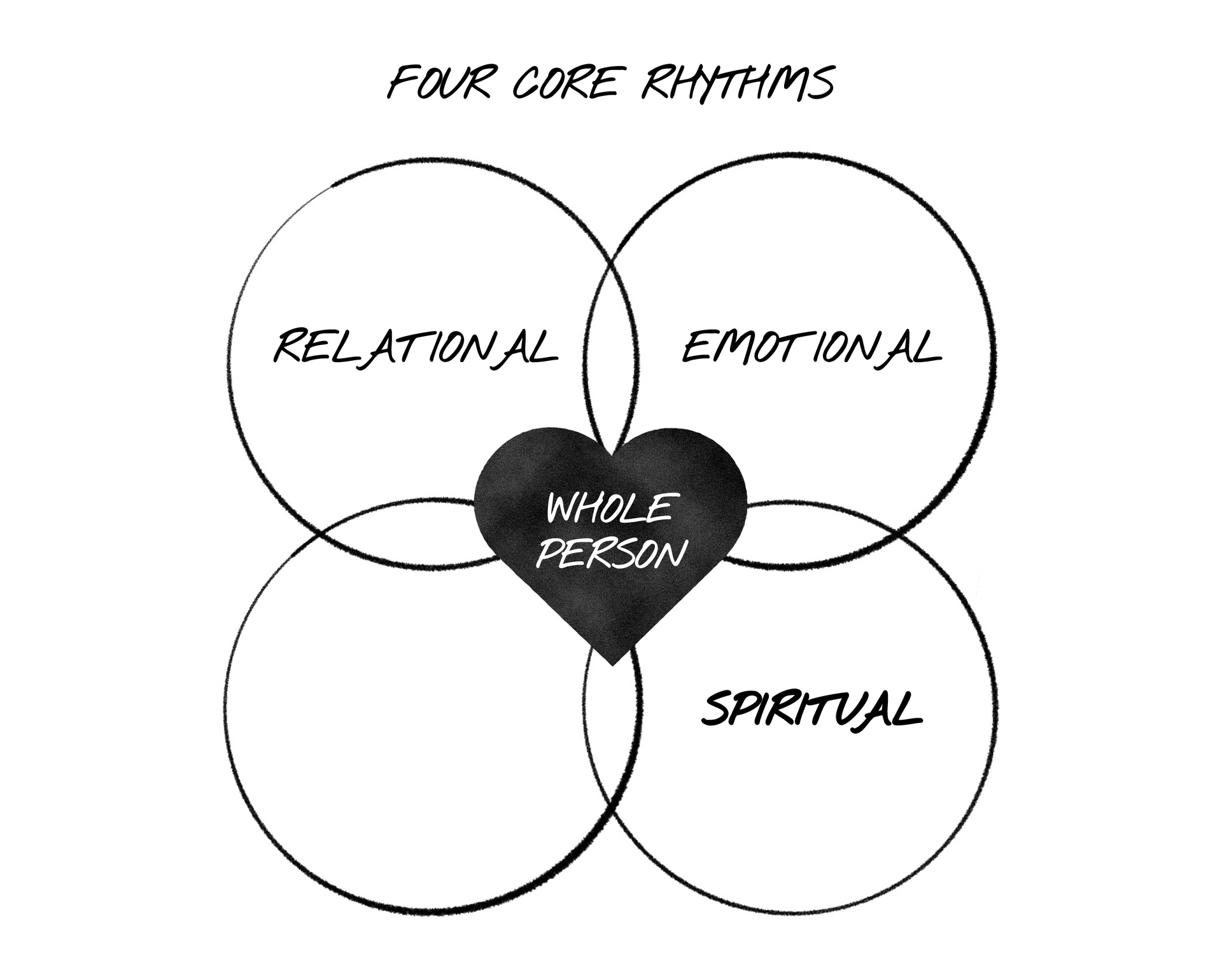
The Spiritual chamber in RHYTHMS OF REST℠ refers to your faith or a philosophy of life—meaning deeper than your next achievement or deadline. Without it, work can easily become our identity and religion.
Derek Thompson gave this problem a name in his 2019 Atlantic article: “workism.” He defines it as “the belief that work is not only necessary to economic production, but also the centerpiece of one’s identity and life’s purpose.” With the decline of organized religion and face-to-face socialization in America, work has become a kind of religion promising identity, transcendence, significance, and community. As Thompson, a self-avowed agnostic, writes, “Our desks were never meant to be our altars.” The oldest day of rest in history was built to remind us of that.
The oldest day off in history
Whether you believe in God or not, the oldest story in the Hebrew Scriptures has a detail about rest that's worth our attention. In the creation story, after everything had been made, we read this in Genesis chapter 2:
“And on the seventh day God finished his work that he had done, and he rested on the seventh day from all his work that he had done.”
The word “rest” in this context comes from a Hebrew word that means to stop, to cease, to celebrate.
If God, who is said to hold everything together, can stop for a whole day to rest and celebrate, and the world didn’t fall apart, then why can’t we? A life with no room to stop, replenish, enjoy, and awe wears down the body and the soul.
Most of us think of rest as recovery: we stop because we’re tired, so we can get back to work. That’s part of it. But Sabbath, or “Shabbat” as it is sometimes called, teaches two truths that have nothing to do with being tired.
First, we were made to enjoy our lives and the fruit of our work. Stopping to celebrate, replenish, enjoy, and awe is the way we were built to run.
And Sabbath is a day to do just that.
The second truth Sabbath reminds us of is that we are not slaves to our work.
You may remember that the Israelites were slaves in Egypt for around 400 years, where they never got a day off. After escaping Egypt, the Sabbath was instituted as a sign that they were free. Sabbath was an act of resistance, declaring they were no longer owned by Pharaoh or by work.
A day of rest is still a declaration that work doesn’t own you.
The business owners and senior leaders I coach have their own version of this. Some call it providing for the family, some call it building something that matters, but either way, work slowly becomes the thing they serve.
Each chamber in REST also has what I call a keystone rhythm: one rhythm that, when practiced, starts a chain reaction in other areas. Sabbath, or a day of rest, is the keystone rhythm for the spiritual chamber.
Sabbath is a posture built on three truths: I don’t run the universe. I am not a slave to my work. Enjoyment is more than a reward for our work.
What happened when Brandon stopped?
I reminded Brandon that the Jewish practice of Sabbath is a twenty-four-hour period of rest that begins at sundown on Friday and ends at sundown on Saturday, and challenged him to consider starting with twelve hours of rest instead of twenty-four. But when he understood he would have time on Saturday evening to do some work, his resistance diminished, and he was sure he could actually do the full twenty-four hours.
Within several months of practicing Sabbath, Brandon experienced a dramatic shift.
He began doing things he enjoyed again—like watching movies. His thinking began to clear. And he drastically cut his work hours from 12-15 hours a day, seven days a week, to 2-4 hours a day, six days a week.
You read that right. That’s a reduction of more than 70 percent in time spent working. That was the secondary effect.
Brandon would be the first to tell you that a day of rest wasn’t the only reason for his breakthrough, but it was the catalyst.
Overcompensating with long hours was just the symptom of something deeper happening in the emotional and spiritual chambers of REST.
Remember what I said to Brandon, “When you rest, God works”? As peace and clarity returned, Brandon was able to make a series of shifts that led to an avalanche of change, including finding the right office manager, who took over much of the workload he had been carrying.
I’ll go on the record here: the leaders still bragging about ‘996,’ twelve hours a day, six days a week, will pay for it with their health, their family, or their clarity.*
Friday nights at our house
It was years after I burned out before I began taking a real day of rest. I still remember the moment when a mentor encouraged me to fiercely protect a weekly day of rest. Up until then, I had been treating it as an afterthought. Afterward, it became life or death.
One author went so far as to call Sabbath-keeping “The linchpin of a life lived in sync with the rhythms that God himself built into our world.”
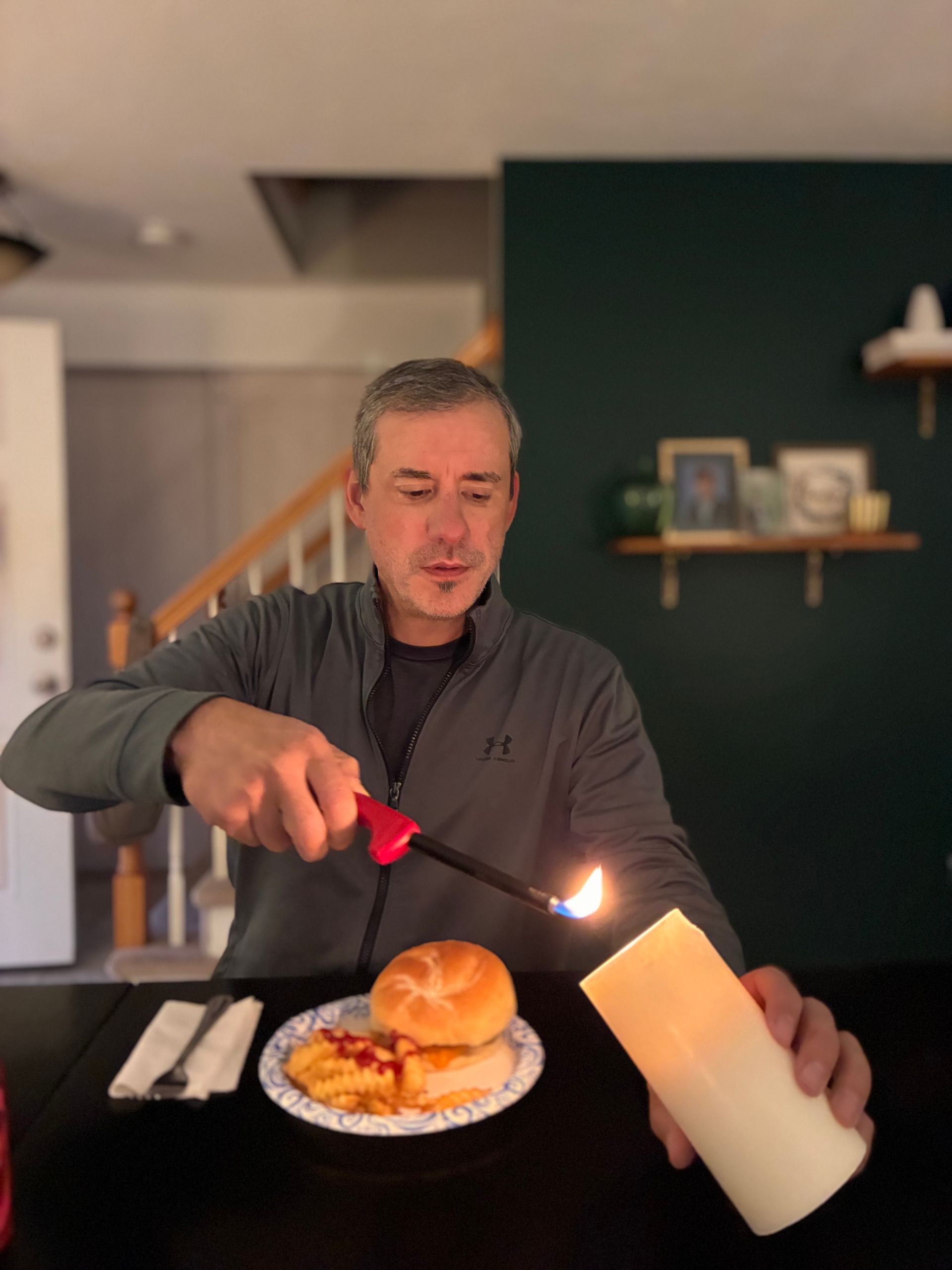
Our Sabbath day of rest has evolved over the years. Here’s how it currently looks. Each Friday, we prepare by cleaning up the house before sharing a meal. As dinner begins, we light a candle, say a prayer, pour the wine, and enjoy dinner together while we share our highs and lows from the past week. We read scripture and a Sabbath reflection, hold silence, clean up, watch a movie or play a game together, and have dessert. As you can see, we keep the meal simple: a burger and fries for this one!
The following day is a combination of rest and delight. For me, that means everything from hiking, going to garage and book sales, reading fiction, playing music, puttering in the garage, and enjoying time with family.*
By Sunday, my body feels rested, and my head is clear enough to plan the week around what matters most, and by Monday morning, my family, the leaders I coach, and the work that matters most get all of me instead of leftovers.
Your RHYTHMS Check
Brandon’s hours were the symptom. The root sat in the spiritual chamber of RHYTHMS OF REST℠: the quiet belief that everything depended on him, and that work got the final say on when he could stop.
If you wait for the work to be finished, you’ll never stop. Brandon waited five or six years.
One move: write down one thing that’s off limits on your day of rest and one thing that would refill you.
One question: If you stopped for one full day, what do you believe would fall apart, and has it ever actually happened?
Until next time,
Kent
P.S. Everything in this series comes from a book I've been writing, coming early next year. I'm gathering a small launch team who'll help me choose the title, see the cover before anyone else, and help me get the word out. You will also get an early digital copy and a signed copy, too! If you're interested in being a part of the launch team, click "TEAM", and I'll send you the details.
Sources
The True Cost of the Churchgoing Bust, by Derek Thompson, The Atlantic
Ruth Haley Barton, Sacred Rhythms, Linchpin quote
*One question many people ask is, what if my kids are in sports? My answer is always the same—fold it into your day of rest if possible. Watching a soccer or basketball game can be a fun part of your day of rest and time with family and friends.
*996: A work schedule of 9 a.m. to 9 p.m., six days a week, or 72 hours. It started in China’s tech industry, where Alibaba founder Jack Ma publicly defended it in 2019. In 2021, China’s Supreme People’s Court and labor ministry declared the practice illegal. Since then, some U.S. AI startups have openly adopted it, listing it in job postings as a sign of commitment.
Whenever you're ready, there are four ways I can help you...
- Take the RHYTHMS OF REST℠ Assessment. In under 3 minutes, you'll know which of your four rhythms is out of sync and the one move to make this week. Free.
- Book an Assessment Debrief. A 45-minute one-on-one coaching session with me. We go over your assessment results together and build the plan for your weakest rhythm.
- Work with me: 1:1 Executive coaching and Group coaching for founders, owners, and executives ready to rebuild how they lead, at work and at home. Apply to see if it's a fit.
- Bring this to your team. Keynotes and workshops for leadership teams, conferences, and CEO peer groups.
Share this Post: