You Have a Plan for Everything—Except Your Life (Here's How to Change That)
Do you have a plan for your life?
As a leader, you probably have a business plan, a marketing plan, a financial plan, and a vacation plan.
But what about your actual life?
Recently, I spent two days with James, a young business owner in Florida, to help him create a Life Plan.
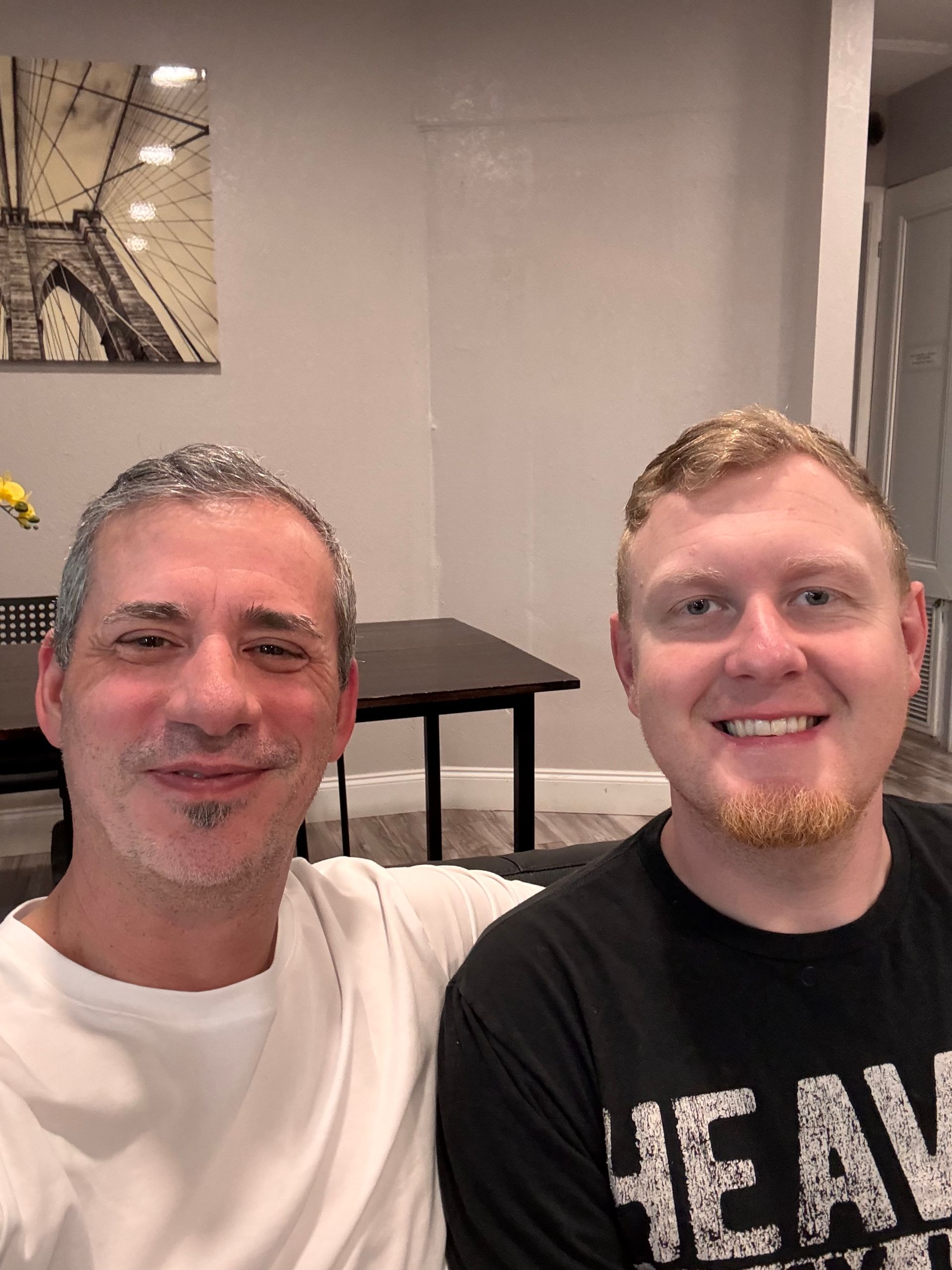
One of the first exercises we did was to establish his personal core values—who he wants to be and how he wants to be remembered. Like many driven leaders, James kept wanting to work on his company's core values first, without realizing that your company’s core values are shaped by how you show up in life as a person and a leader. This revealed a faulty belief James had about work:
You have to hustle and grind to be successful.
This hustle-and-grind culture is one of the most toxic leadership beliefs there is—especially for young leaders—often leading to burnout and worse. It’s not that leaders never need to hustle; it’s just not a long-term strategy for sustainable success, nor does it guarantee anything—especially if you have your ladder against the wrong wall.
The Belief Behind the Behavior
James' faulty belief created a narrative. That narrative created anxiety. And that anxiety drove an action—more hustling and grinding—which reinforced the faulty belief.
If you want to change what you do, you first need to change the underlying belief that fuels it.
Brain scientists call this neuroplasticity—your brain's capacity to rewire itself by building new pathways. It means you can change dysfunctional patterns of thinking and develop new mindsets and abilities.
Just like athletes train their bodies to do new things, you can retrain your brain.
From Pain to Purpose
I wish I had done a Life Plan at 28 like James. Maybe I wouldn't have had to go through so much unnecessary pain and relational fallout. But pain can produce purpose when it's used to help others.
Viktor Frankl, the Nazi prison camp survivor who wrote Man’s Search for Meaning, believed purpose came from three sources: a person to love, a work to do, and, most importantly—finding meaning in unavoidable suffering by using it to help others.
Every one of us will experience suffering in this life. I had a fall-down-on-the-floor nervous breakdown at 27 that I thought I would never get up from. But now I get to help leaders like James design a life that moves in sync with his most important values and rhythms.
The Way Things Ought to Be
For millennia, Jewish people have encapsulated wholeness in a single word: Shalom. Most people translate it as "peace," but it means far more—health, harmony, completeness, and vitality in all dimensions of life. When used as a verb, shalom means actions that lead to a state of wholeness.
In other words, shalom is the way things ought to be. Not perfection, but wholeness. And wholeness isn't a destination you arrive at—it's a direction you move toward.
That breakdown at 27 became the doorway into what I now call the RHYTHMS OF REST℠—a framework designed to keep your core life rhythms in sync so you can move toward shalom, toward the way things ought to be.
Much like the human heart, where all four chambers work together for proper blood flow, your life depends on four core rhythms working together in harmony: Relational, Emotional, Spiritual, and Tangible.
R: Relational Rhythms - cultivating deep connections that energize rather than drain you, even when your schedule is packed
E: Emotional/Mental Rhythms - creating space to process, reflect, and grow instead of pushing through.
S: Spiritual Rhythms - being grounded in your faith or in a robust philosophy of life that provides meaning deeper than your next achievement or deadline.
T: Tangible Rhythms - caring for your body, finances, and work in a way that supports your other rhythms.
In less than 48 hours, James went from a general sense of where he was headed to a clear written plan for his life. James didn’t lack overall purpose or direction; he just hadn’t put it into words—simple, clear, and memorable.
Your RHYTHMS Check
This is about all four of your rhythms working together—because a Life Plan isn't about one area of your life. It's about getting your Relational, Emotional, Spiritual, and Tangible rhythms in sync so they move you toward wholeness instead of pulling you apart. But here's what James' story reveals: it often starts with your Emotional and Mental rhythms—the beliefs running beneath your behavior. When a faulty belief goes unchallenged, it doesn't just hijack your mindset. It bleeds into everything else and throws the other rhythms out of sync.
If you don't examine the beliefs driving your behavior, you'll keep grinding harder and wondering why nothing changes.
But when you name the belief and challenge it, you create new patterns, new energy, and new behaviors.
This determines whether you're leading from conviction and clarity or just reacting from anxiety and faulty, ingrained thought patterns.
This week's rhythm: Identify one belief about work or success that drives your behavior. Write it down.
What belief about success are you carrying that you've never actually questioned?
Hit reply and tell me the belief you wrote down. Just one sentence. I read every response—and you'd be surprised how many leaders are carrying the exact same one.
Until next time,
Kent
P.S. Find out exactly where you stand—and what to do next. In 5 minutes, the free RHYTHMS OF REST℠ Assessment will show you whether the cracks are just starting or further along than you think, so you can take the next right step before it's too late."
Sources
- What Is Neuroplasticity? https://psychcentral.com/health/what-is-neuroplasticity
- Dr. Aviezer Ravitzky, “Shalom: Peace in Hebrew,” My Jewish Learning, accessed August 17, 2025, https://www.myjewishlearning.com/article/shalom/
- Bruce Hurt, “Peace-Shalom (Hebrew Word Study,)” Precept Austin, January 17, 2025, https://www.preceptaustin.org/shalom_-_definition
- Leslie, Allen, “Shalom as Wholeness: Embracing the Broad Biblical Message,” Fuller Studio, accessed August 17, 2025, https://fullerstudio.fuller.edu/shalom-as-wholeness-embracing-the-broad-biblical-message/
Share this Post: